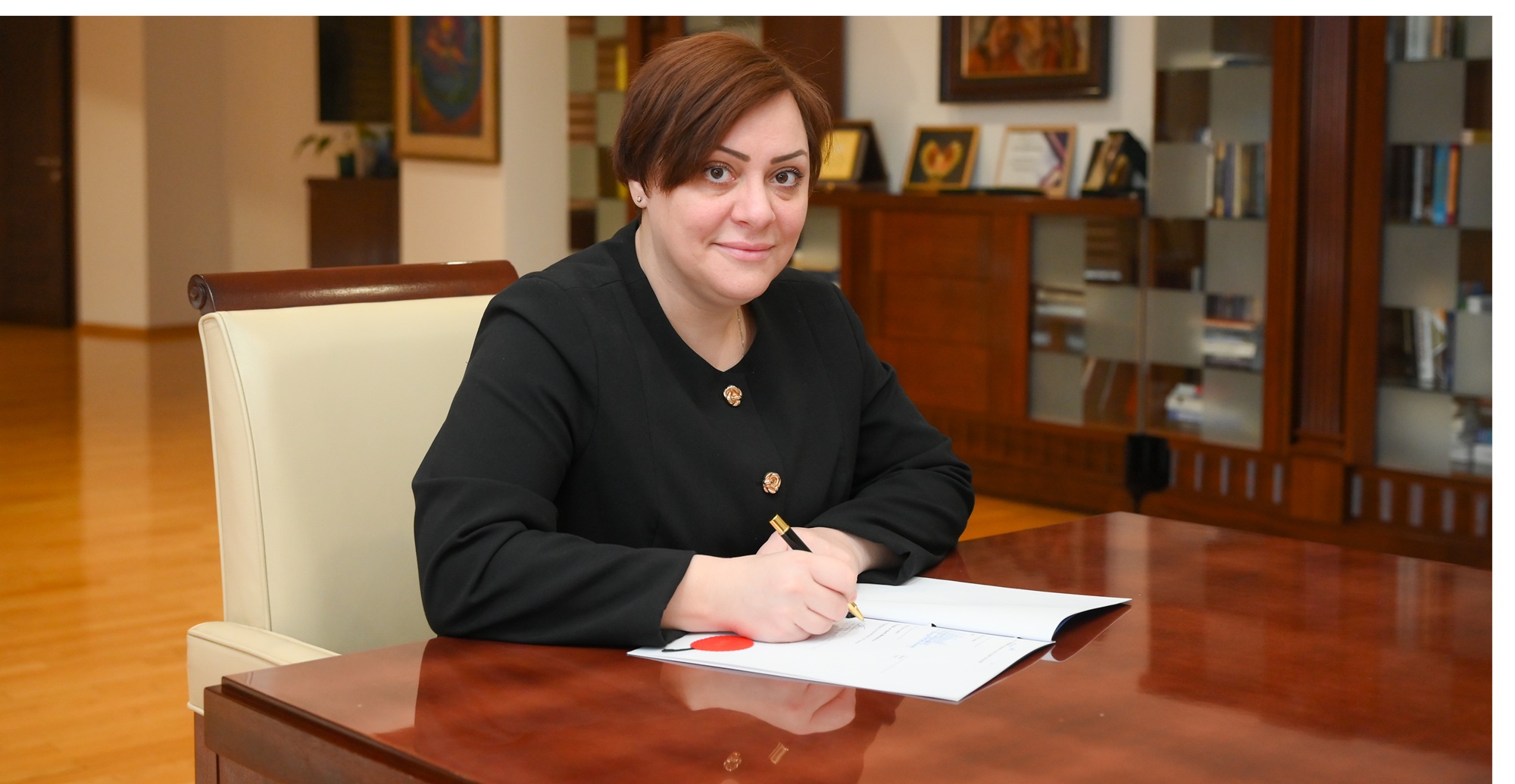
19th March 2026, Skopje – Today, Minister of Finance, Gordana Dimitrieska-Kochoska, signed a Loan Agreement between the Republic of Macedonia, represented by the Ministry of Finance, and KfW, as well as a Supplemental Grant Agreement between the Republic of Macedonia, represented by the Ministry of Finance and the Ministry of Education and Science, and KfW.
Additional EUR 40 million has been made available under the Loan Agreement intended for implementation of the second phase of investments in educational infrastructure, with a particular emphasis on enhancing the quality of accommodation and learning conditions for pupils and students, as well as improving the energy efficiency of public buildings.
The investment cycle encompasses continuation of the reconstruction of state student dormitories, whereby “Kuzman Josifovski Pitu” and “Stiv Naumov” student dormitories are already undergoing full-scale renovation, also including the extensive refurbishment of the remaining state student dormitories. In parallel, renovation works will be carried out at seven state schools equipped with resource centers, which play a crucial role in ensuring inclusive education for pupils with special educational needs.
Furthermore, through the EU-supported Regional Energy Efficiency Programme for the Western Balkans, additional grant amounting to EUR 1.25 million has been allocated. These funds are intended for preparing the respective project documentation, performing energy audits, developing detailed designs, and carrying out procurement procedures, thus providing substantial support for timely and high-quality investment implementation.
Agreements were signed by Minister of Finance, Gordana Dimitrieska-Kochoska, Minister of Education and Science, Prof. Vesna Janevska, PhD, and Pablo Obrador Álvarez, Head of Energy Division in the Department for Southeast Europe and Türkiye at German KfW Development Bank.
By signing these Agreements, Ministry of Finance reaffirms its strategic commitment to providing affordable financial resources for implementation of capital investments with long-term impact, as well as strengthening partnerships with international financial institutions and the European Union.
This investment will serve to strengthen the quality of the education system, improve the high-school and university students’ standard, enhance the energy efficiency of public buildings, and reduce carbon dioxide emissions, thereby fostering sustainable and inclusive economic development.