
26th May 2026, Skopje - Ensuring sustainable and stable public finances over the medium and long run, pursuing gradual and accountable fiscal consolidation by reducing budget deficit, preserving macroeconomic and financial stability amidst energy and price volatility, as well as creating conditions for sustainable economic growth, while strengthening the economy’s resilience to future crises. These are the main objectives of the fiscal policy set forth in the Fiscal Strategy covering the period 2027–2031, prepared by the Ministry of Finance and adopted by the Government. The Fiscal Strategy was reviewed today at the Parliament’s plenary session.
As per the 2027–2031 Fiscal Strategy, the fiscal policy will be also geared towards creating preconditions for a new cycle of economic growth via boosted public capital investments, gradual fiscal consolidation and improved public finance management. Alongside the commitment to fiscal consolidation and budget savings, support for the economy will continue via making investments in infrastructure projects, redesigning the public finance structure by maintaining high level of capital expenditures, as well as strengthening both the transparency and the accountability. At the same time, non-essential expenditures will be reduced and spending effectiveness and efficiency will be substantially improved, reflecting the commitment to pursuing disciplined fiscal policy.
The Fiscal Strategy contains the medium‑term fiscal policy guidelines and objectives, which will be grounded in fiscal accountability and discipline by planning and employing the public funds within realistic and sustainable fiscal capacity, ensuring gradual and predictable implementation of the fiscal consolidation, without abrupt restrictions that could trigger economic shocks. The Strategy also foresees social fairness to safeguard the most vulnerable categories of citizens from the adverse effects of the crisis and the fiscal adjustments, accompanied by transparency and accountability through clearly defined measures and mechanisms for monitoring and reporting.
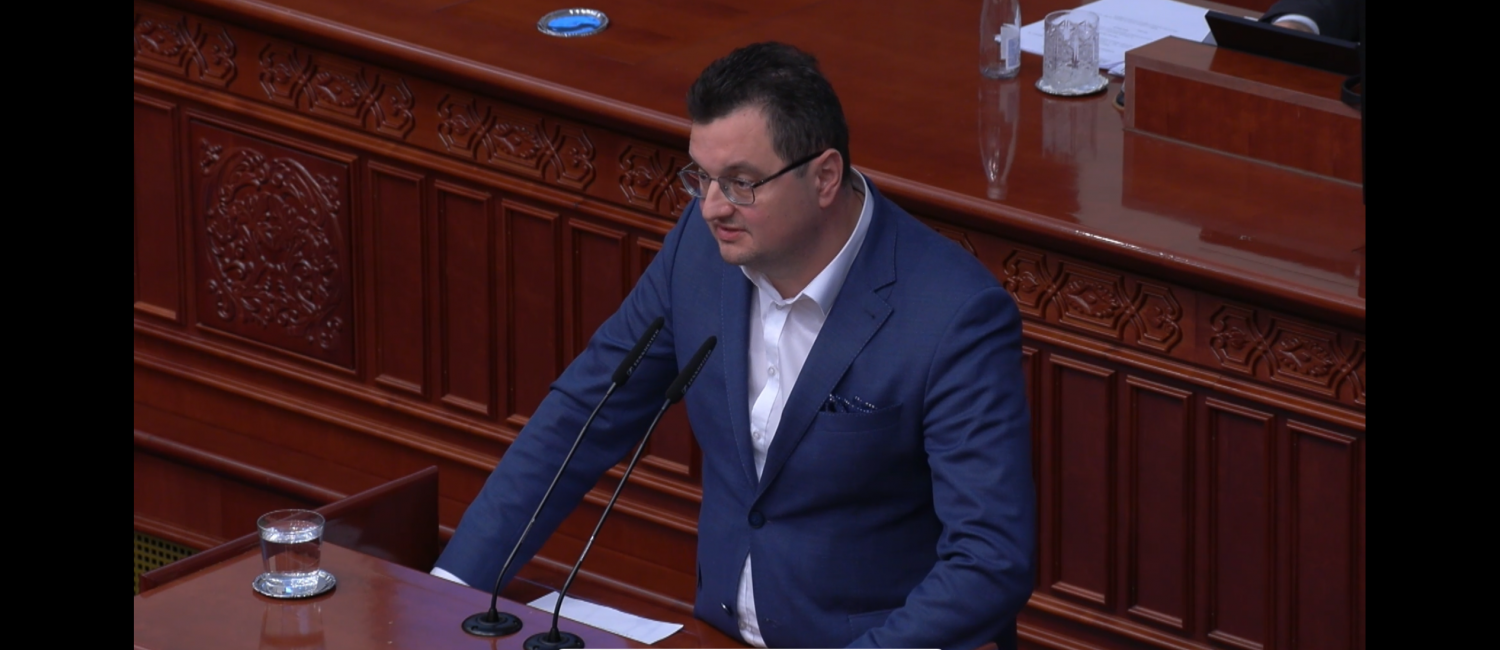
Deputy Minister of Finance, Nikolche Jankulovski, when presenting the document before the Parliament, highlighted that during the period 2027–2031, tax policy will be based on reduced grey economy and higher State budget revenue collection, by advancing digitalization and putting and efficient tax system in place, all to the end of ensuring that everyone pays its fair share of tax in a just manner.
“Public debt management policy will focus on ensuring the funds necessary to cover the budget deficit, repay the due liabilities on the basis of prior borrowings and finance projects, while preventing debt from rising to a level that could jeopardize the country’s economic stability and growth”, Deputy Minister pointed out.
The adopted Government Fiscal Strategy, through clearly defined objectives, principles, and measures, provides for a balanced approach to addressing the ongoing fiscal and economic challenges. The fiscal consolidation focus thereby serves as the cornerstone in safeguarding stability and ensuring sustainable and inclusive economic growth. Looking ahead to the medium term, up to 2031, a gradual reduction of the budget deficit as a share of GDP is projected, declining from 3.5% in 2027, to 3% in 2028, and reaching 2.8% in 2029. As per the projections, as of 2028, the budget deficit is fully aligned with European standards related to fiscal discipline, sending a clear signal of preserved stability and credibility as regards public finances.
Over the period 2027–2031, economic growth is expected to gradually gain momentum, with overall economic activity projected to record an average 4% growth. Strategic infrastructure and energy investments, financial assistance for the investment activity of domestic production companies aimed at enhancing innovations, and boosting both the competitiveness and the productivity, coupled with reforms in the field of business climate and tax policy, export growth, education reforms aligned with current labor market demands, fight against corruption, grey economy, and unfair competition, as well as digitalization of public service delivery to citizens and businesses, are expected to contribute to unlocking the country’s growth potential. Growth will also be driven by efforts to attract foreign direct investment and expand existing capacities of foreign companies. Additional impetus to economic activity is anticipated through the EU Growth Plan for the Western Balkans. In line with the Fiscal Strategy, one of the key assumptions for achieving higher growth rates is the stabilization of global environment, the easing of inflationary pressures, and the strengthening of economic activity among our major trading partners.
Capital expenditures will serve as the cornerstone of fiscal policy and the driving force of economic growth, all to the end of delivering lasting economic gains by expanding public capital in the field of road and railway infrastructure, energy capacities, water supply and sewage systems, digital and educational/social infrastructure. The foreseen capital investments are projected to boost both the productivity and the competitiveness of the economy.
The Fiscal Strategy reflects a systematic and medium‑term approach to managing public finances, focused on safeguarding macroeconomic stability, ensuring public debt sustainability, and underpinning economic growth. Fiscal Strategy is a document prepared on the basis of the Organic Budget Law, including medium-term fiscal policy guidelines and objectives, baseline macroeconomic projections, amounts of the main categories of projected revenues and expenditures, as well as budget deficit and debt projections over the next 5-year period.