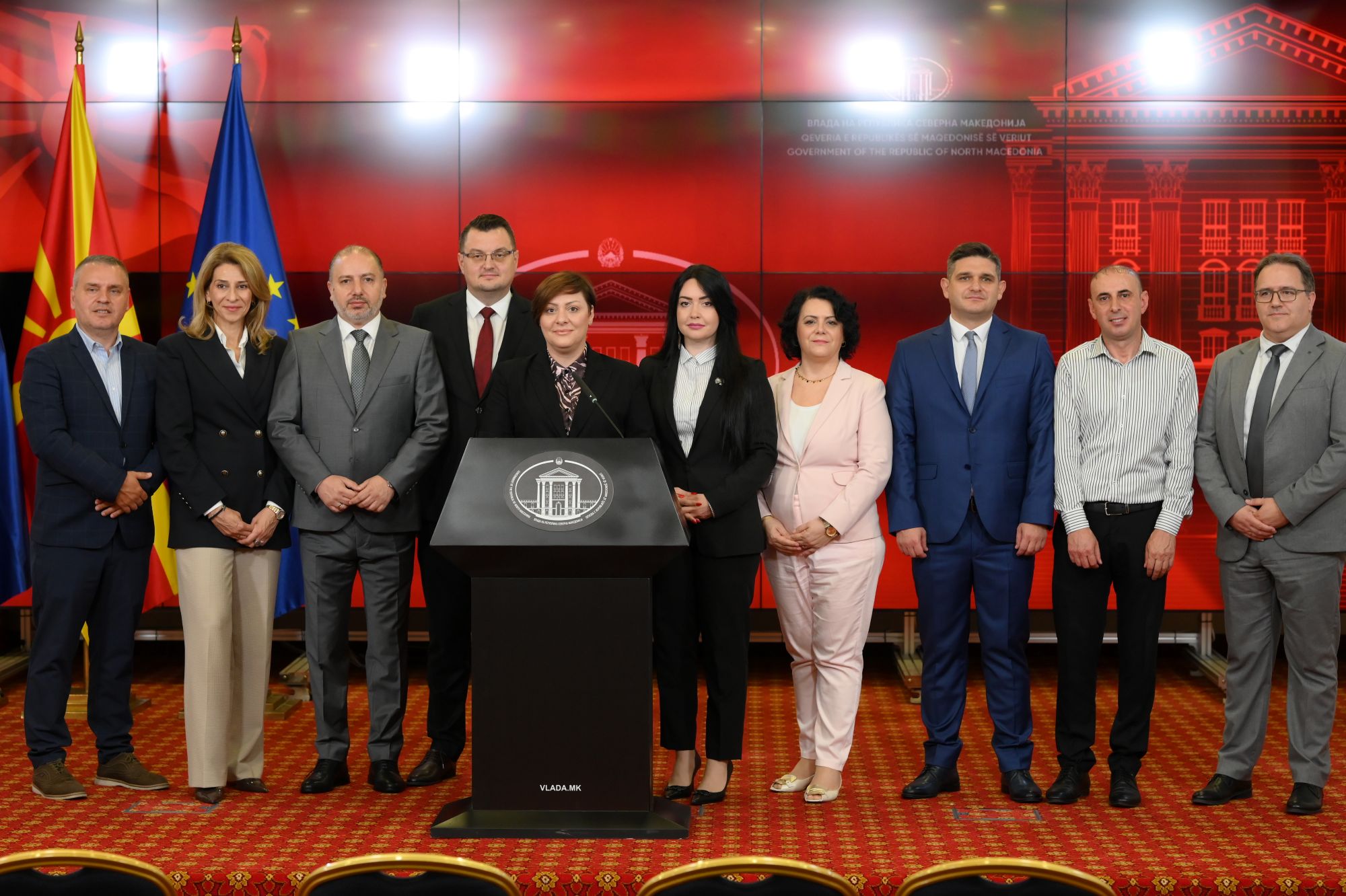
7th July 2026, Skopje - Today, the Minister of Finance, Gordana Dimitrieska-Kochoska, convened a press conference to present the activities the Ministry of Finance carried out over the past two years.
We are pleased to share the full speech from the Minister’s address:
It has now been two years of managing public finances. Two years amidst economic headwinds, global uncertainties and major fiscal challenges. Yet also two years in which we made a deliberate choice - discipline, fiscal responsibility and sustainable solutions instead of populist quick fixes.
Over these two years, the macroeconomic results have been more than evident: Macedonian economy has steadily recovered and continued to grow. Looking back, between 2017 and 2023, average economic growth was around 1.8%, while today we are moving at a much stronger pace: 2024 - 3%, 2025 - 3.5%, 2026: a stable, positive trajectory of economic growth.
In 2022, inflation reached 14.2%, significantly impacting citizens’ standard of living. Today, despite the protracted global uncertainty and the aftermath of one of the most severe energy and economic crises in recent decades, inflation in May stood at 4.8%, with projections suggesting inflation expected to stay stable for the rest of the year.
This shows that we have managed to cushion the global price shocks and restore a predictable economic climate. It is especially important, because stable inflation is a critical factor in enabling real wage growth. Over the past two years, wages have increased at a strong pace. Nominal wages rose by 12.6% in 2024 and by 9.6% in 2025, and are expected to grow over 8% this year. More importantly, for the first time in years, the citizens are now seeing real growth of their wages. Following the 2.9% decline in 2022, wages grew by 8.8% in 2024 and by additional 5.3% in 2025. This is a clear signal that the purchasing power is improving. We understand the struggles of the citizens, we share them and we are committed to working tirelessly to overcome them.
Improvement is evident across most statistical economic indicators. These figures stand as proof of our work. But, results like these do not happen overnight. They reflect two years of immense dedication and hard work by the Ministry of Finance.
Restoring confidence in the fiscal policy was one of my guiding motives upon taking office. My foremost priority was stabilizing the public finances. Under the 2024 Supplementary Budget, we provided for liquidity and ensured that wages, pensions and social transfers are paid on time and that government liabilities were promptly repaid. This has been our priority in every budget since and it will remain so.
During this period, EUR 4.4 billion of public debt was repaid, with an additional EUR 983 million falling due by the end of the year. The Ministry of Finance has secured funds over the last two years to repay debt liabilities on the basis of prior borrowings. Thereby, the main focus was on managing the loan maturity. The burden on the Budget differs significantly depending on whether large amounts, such as the EUR 700 million Eurobond, are to be repaid in 4, 5 or 8 years. Managing maturities is key to keeping fiscal stability. Likewise, it makes a big difference whether substantial repayments occur every second year or every single year, as is currently the case with the Eurobonds maturing in large amounts across all four years. In the meantime, we repaid domestic and foreign debt, also securing funds for the largest investment cycle in recent years. Despite the substantial debt repayment, funds were allocated to expand capital investments, ensure timely payment of wages, pensions and social rights, as well as to support the businesses.
Public debt in Q1 2026 accounted for 58.9% of GDP, being below the level before taking office relative to the GDP projections of the previous government.
This reflects a fundamental difference in the way we manage public finances. We do not incur deficits for current spending. We create room for investments that drive future economic growth.
During this period, capital investments scaled up across:
- road infrastructure
- railways
- energy
- education
- utility infrastructure and
- defence and security.
These projects are underway and the citizens can see it firsthand. The budget policy stands as central indicator of the shift in economic policy over the past two years.
We have introduced a new approach in managing public investments. By establishing the Public Investment Committee, we began setting the priorities in a systemic way, guided by clear criteria, financial sustainability and readiness of the projects. The days when capital investments were just words on paper are behind us. Today, public funds are allocated to projects that are well-designed, justified and deliver the greatest benefit to the country.
Over the last two years, we have focused strongly on improving the business climate. Customs tariffs for 70 raw materials and intermediate goods used in the domestic industry were aligned with those applied in the EU, thus reducing the companies’ production costs and boosting their competitiveness. This measure is a result of a close dialogue with the chambers of commerce and it is yet another step towards full alignment with the European customs policy.
EUR 250 million favourable loans were secured for the domestic companies, thus providing strong financial support for their investment activity, production modernization, boosted competitiveness and job creation. Around EUR 250 million support was allocated for municipal capital projects, intended for local roads, water supply and sewerage infrastructure, kindergartens and schools.
These two pillars constitute a new model of development, founded on an investment partnership between the central and the local government.
Ministry of Finance is working on revising the VAT Law, the CIT Law and the PIT Law, along with drafting a new Customs Law, all to the end of establishing a streamlined system, stronger revenue collection and digitalization of processes and services.
The OECD Pillar 2 system was introduced, along with adopting the laws and the regulations governing the global minimum tax, in parallel with its adoption in the European Union. This system envisages a 15% minimum effective tax rate for corporations the revenues of which exceed EUR 750 million, generating direct budget revenue with a strong structural effect by curbing tax competition.
New Law on Games of Change and Entertainment Games was adopted, giving the citizens, especially the young people, greater protection, tightening the control over the operators, raising the integrity standards and fighting money laundering more efficiently. Moreover, under the new Law, fees for the organizers of games of chance are raised, thus providing for higher budget revenues. This decision was made after analyzing the market conditions, recognizing that the profit had risen, while fees in this sector had remained unchanged for over a decade. Over the period 2024 - 2026, we have significantly strengthened the control and the monitoring in this sector, resulting in revoking two licenses for organizing games of chance and one authorization on technical compliance of the gaming machines, upon proposal by the Ministry of Finance. We acted upon several citizen reports, taking adequate measures and requesting the authorities in charge to carry out control.
At the same time, we are working on amendments to the legislation governing financial companies, aimed at strengthening the protection of the citizens and the stability of the financial sector. During the period from 1st July 2024 to 30th June 2026, the citizens witnessed concrete measures undertaken by the Ministry of Finance, also confirmed by the on-site and the off-site monitoring. The monitoring led to five licenses being revoked, fines totaling Denar 2.58 million or around EUR 41,900 imposed on 18 financial companies, 55 written orders being issued to remedy the detected irregularities, and in one case, imposing temporary 30-day prohibition to perform activity. We have demonstrated that we never waver when it comes to enforcing the law, whatever the circumstances.
During this two-year period, the Treasury Department within the Ministry of Finance ensured continued and seamless payment operations for the budget users, processing on average around 160,000 payment orders per month or around 2 million a year. Moreover, staffing capacity was expanded across 17 regional treasury offices, including the reopening of the one in Gevgelija, thus improving both efficiency and service accessibility.
In line with the new Organic Budget Law, existing bylaws were revised and new ones were adopted. By cooperating with the U.S. Department of Treasury and the International Monetary Fund, the Ministry enhanced the practices in liquidity management and government finance statistics. As a result, the Ministry of Finance now regularly publishes quarterly and annual data in the IMF and the World Bank databases, boosting transparency and alignment with the international statistical standards.
Reforms were also aimed at building stronger institutions. We launched the Public Finance Academy, took over the chairmanship of the CEF Governing Board and, through regional and international cooperation, continue to build stronger public administration capacities.
We undertook activities aimed at strengthening and developing the capital market domestically and regionally by fostering cooperation among the relevant institutions and creating conditions for new financing and investment opportunities for the companies.
To support the development of the domestic capital market and diversify sources of funding, we successfully continued the issuances of development bonds for citizens.
The demand at the third auction was considerable, with 1,543 citizens investing more than Denar 2 billion or around EUR 33 million, far beyond the originally offered amount. This stands as a powerful proof of the trust citizens place in the economic policies and the state. Previously issued two development bonds for citizens, totaling EUR 41.1 million, were repaid in full and on time, including the accrued interest for both years, confirming the safety and the reliability of this financial instrument.
In parallel, work is ongoing to digitalize the process of issuing and registering the development bonds for citizens, in order to provide citizens with a more straightforward and accessible investment option.
In the period ahead, we will continue to pursue fiscal consolidation, advance public finance digitalization, combat informal economy, improve tax administration, modernize the financial system, and create even better conditions for both domestic and foreign investors.
Over the past two years, we have also encountered a new global challenge. The armed conflict in the Middle East has triggered significant disruptions on the global markets, particularly in the energy sector, creating a risk of a new price shock and further inflationary pressures. For the purpose of cushioning the price shock, measures were introduced to reduce VAT on petroleum products from 18% to 10%, as well as to lower excise duties on diesel and gasoline, with the aim of easing pressure on fuel prices, curbing inflation, and protecting both citizens and business sector. As a small, open economy, Macedonia is inevitably affected by global developments. However, what we are capable of achieving, and have demonstrated over the past two years, is that timely, accountable, and well-targeted policies allow us to effectively mitigate the consequences of external crises. Therefore, we remain firmly committed to preserving price stability, safeguarding living standard, and creating a predictable economic environment for both citizens and business sector.
Ladies and Gentlemen,
Particular emphasis was also placed on implementing the 2024–2027 Reform Agenda, which is crucial for our country’s European integration, as well as the public finance modernization. We have met 8 out of a total of 22 steps completed by the country, with 36% of all completed steps attributable to the Ministry of Finance, leading to approval of EUR 142.1 million under the EU’s Plan on Growth for the Western Balkans.
New Law on Public Internal Financial Control was adopted, fully aligned with the European standards, thereby finalizing all by-laws under the organic Budget Law, and putting a new public investment management system in place, while also increasing transparency and efficiency in public procurement process. These reforms go beyond the mere fulfillment of European criteria, they rather contribute to building more efficient institutions, improving the public fund management, and creating better conditions for economic growth and investments.
Taken together, these actions have a direct impact on the country’s sound macroeconomic situation.
In the field of EU funds management, the institutional framework for implementing IPA III Multi-Annual Operational Programmes has been established, and EUR 160 million has been secured as grants under the IPA indirect management modality. In addition, a long-term solution has been put in place to retain and motivate staff involved in the management of IPA funds, by providing a wage allowance ranging from 15% to 30% of the base wage.
At the same time, we swiftly overcame the interruption of payments under IPARD III through a series of measures and actions carried out by the national structures, thus attaining a record level of fund absorption, with 11% of payments made and 29% of contracts signed, placing the country among the most successful beneficiaries of IPARD funds.
At the same time, numerous IPA-funded projects have been launched and successfully implemented, aimed at improving transport infrastructure, environmental protection, education, and social policy.
In the 2024–2026 period, the Central Financing and Contracting Department (CFCD) at the Ministry of Finance implemented and launched a number of significant IPA projects in the field of infrastructure, environmental protection, water management, education, and social policy. These investments help improve public services, raise quality of life, strengthen institutional capacities, and speed up alignment with European standards.
Respected Members of the Media,
Today, alongside Deputy Minister, Nikolche Jankulovski and State Secretary, Andrijana Matlioska, I am joined by the directors of the institutions within the Ministry of Finance. Together, we implemented the reforms and achieved the results I am about to present. Their presence stands as testimony to coordinated work, professional dedication, and shared responsibility that have marked the past two years of policy implementation.
Also present here today are the Director of the Public Revenue Office, Elena Petrova, the Director of the Customs Administration, Boban Nikolovski, the Director of the Financial Police Office, Slobodan Ivanovski, the Director of the Financial Intelligence Office, Kujtim Ibishi, the Director of the Public Procurement Bureau, Mare Bogeva, the Director of the Property and Legal Affairs Office, Zoran Krstanovski, and the Director of the State Foreign Exchange Inspectorate, Afrim Qoku. Allow me to share some of the activities they have implemented over the last two years.
Public Revenue Office has delivered sustained and robust revenue growth over the past two years, reflecting both intensified economic activity and enhanced institutional efficiency.
Over the past two years, additional tax, amounting to Denar 5.2 billion, was identified through tax inspections, marking an increase of over 70% in 2025 compared to 2024. During the same period, more than 13,500 fines were imposed, and 78 criminal charges were filed on suspicion of causing financial damage to the Budget, amounting to approximately Denar 995 million, compared to only 15 charges filed in the previous period.
Alongside tighter inspections, the Public Revenue Office is also advancing its digital transformation and further improving its services. In 2025, the Public Revenue Office introduced the new digital service “e-Certificate on Earned Income”. The process of issuing the “Tax Status Certificate” has been notably simplified, all to the end of achieving its full digitalization. Significant automation has been introduced into the VAT refund process, speeding up processing procedures and easing administrative workload.
For the purpose of modernizing the systems, the tax return portals have been consolidated, and controls related to refunds based on annual tax returns have been strengthened. Submission of tax returns in accordance with the new global minimum tax regulation has been allowed, together with the implementation of software supporting the new model of employment engagement.
A key component of the reform is the establishment of a tax compliance risk management system. In addition, internal analytical software has been developed to automatically assess the risk level of VAT returns on the basis of 18 predefined criteria, thereby increasing the objectivity and efficiency of the VAT refund approval process.
In terms of institutional and ICT capacity development, the Public Revenue Office implemented the largest single investment in its history, amounting to EUR 2.6 million, intended for ICT infrastructure and cybersecurity. This investment resulted in the establishment of a secondary site for the first time, while ensuring greater stability, security, and operational continuity.
The implementation of the e-PRO reform - a new integrated tax administration system is also underway. The e-Invoice Project has reached an advanced stage of implementation, with training sessions, presentations, and pilot testing underway with companies. This system will allow for full digital tracking of transactions, more efficient revenue collection, reduced informal economy, and significantly streamlined business sector operations.
The Customs Administration achieved significant progress across all key areas of its operations, directly contributing to the strengthening of the country's fiscal stability, security, and economic resilience. In terms of operational activities, capacities for control and prevention of illegal activities have been strengthened, resulting in the prevention of more than 2,700 attempted illegal activities, thus making a significant contribution to safeguarding the country's security and the integrity of the customs system.
During the same period, around 950 seizure cases were recorded, reflecting strengthened field activities and improved efficiency in detecting prohibited goods and identifying violations. With respect to the investigative capacity, 70 criminal charges were filed in the second half of 2024, accounting for nearly 80% of all criminal charges submitted during that year. In 2025, investigative activities were further intensified, resulting in 213 criminal charges being filed, being a fivefold increase compared to the annual average for the 2017–2023 period.
In total, since the start of the term of office, the Investigations Unit within the Department for Control and Investigations has filed 374 criminal charges against 854 individuals and 283 legal entities, confirming a strengthened and continuous fight against organized and economic crime. In terms of reforms, projects amounting to approximately EUR 30 million are currently being implemented, financed with Budget funds, grants from the European Union and the Republic of Korea, as well as World Bank funding. These projects are focused on strengthening institutional capacities, boosting the competitiveness of Macedonian economy, and accelerating its integration into the European Union Single Market.
The border crossings of Kjafasan, Deve Bair, Delchevo, Klepalo, and Markova Noga are currently undergoing reconstruction and modernization with the aim of improving infrastructure and technical capacities in support of faster and more efficient flow of passengers and goods, strengthening security and control standards, and aligning border-crossing operations with European practices and standards.
Over the past two years, the Financial Police Office has significantly strengthened its activities in the fight against financial crime, focusing on the protection of public finances, the conduct of financial investigations, and the detection of property acquired from illegal sources. During this period, 83 criminal charges were filed against 222 individuals and 84 legal entities, with also 405 referrals being submitted to the competent public prosecutor’s offices. The investigations identified total financial damage and unlawful property gain exceeding Denar 5.5 billion.
At the same time, the use of financial investigations has significantly increased as a key instrument for detecting and confiscating property acquired from illegal sources. Following the entry into force of the Law on Confiscation of Property in Civil Proceedings, the Office has actively implemented new mechanisms for securing and confiscating property. These results confirm our commitment to an uncompromising fight against financial crime, safeguarding Budget funds, and strengthening the rule of law.
Over the past two years, the Financial Intelligence Office has significantly strengthened the national system for preventing money laundering and terrorist financing by its alignment with European and international standards. The National Risk Assessment and the new National Strategy in the field of anti-money laundering and financing of terrorism were adopted, along with legal amendments and action plans aimed at meeting MONEYVAL recommendations, with particular emphasis on addressing emerging risks associated with crypto-assets.
Following a supervision conducted by the Financial Intelligence Office, a bank was fined a total of EUR 46,000 in 2024 for failing to comply with its obligation to report suspicious transactions. In 2025, due to the same irregularities, fines totalling EUR 80,500 were imposed on three entities, two banks and one financial company, being subsequently collected.
In addition to financial sanctions, corrective measures were imposed in 2024, accompanied by recommendations to address the identified deficiencies at total of four entities: one bank, one leasing company, one casino operator, and one betting establishment operator.
Over the past two years, the Public Procurement Bureau has made significant progress in modernizing and digitalizing the public procurement system. The Electronic Public Procurement System (EPPS) was upgraded with new functionalities that streamline procurement procedures, simplify administrative processes, and enhance efficiency and transparency. Integration of beneficial ownership data into the Electronic Public Procurement System is a key achievement. Today, beneficial ownership information is publicly available for more than 99% of the 19,000-plus published public procurement contracts, providing a robust mechanism for enhancing transparency, strengthening accountability, and preventing misuse.
At the same time, we expanded the use of the electronic marketplace for small value procurement, further developed the risk monitoring system through the introduction of 'red flag' indicators, with the public procurement reforms, receiving positive assessment by both the European Commission and the World Bank.
During the past two years, the Property and Legal Affairs Office has made substantial progress in improving the efficiency of administrative procedures and implementing capital projects. Following the clearance of a long-standing backlog, the processing of cases related to the privatization of construction land accelerated significantly, with around 20,000 decisions issued between July 2024 and June 2026. At the same time, the Property and Legal Affairs Office played a key role in the implementation of strategic infrastructure projects, conducting over 5,700 expropriation procedures and thereby directly contributing to the accelerated construction of Corridors 8 and 10d, Kichevo–Ohrid motorway, and various local and energy projects. In parallel to operational activities, we have also worked on advancing the legal framework and streamlining the procedures, to the end of providing more efficient services to citizens and accelerating investment implementation.
However, we recognize that the reform process does not end here.
Our vision remains the same – sound institutions, stable public finances, competitive economy and a higher standard of living for every citizen. For two years running, we have demonstrated our commitment to accountable governance, and that we have the capacity to make difficult yet right decisions, proving that we are also able to build sustainable system rather than merely react to day-to-day challenges. This is the course we will continue to pursue in the period ahead, marked with scaled-up investments, further reforms, and an even stronger economy.